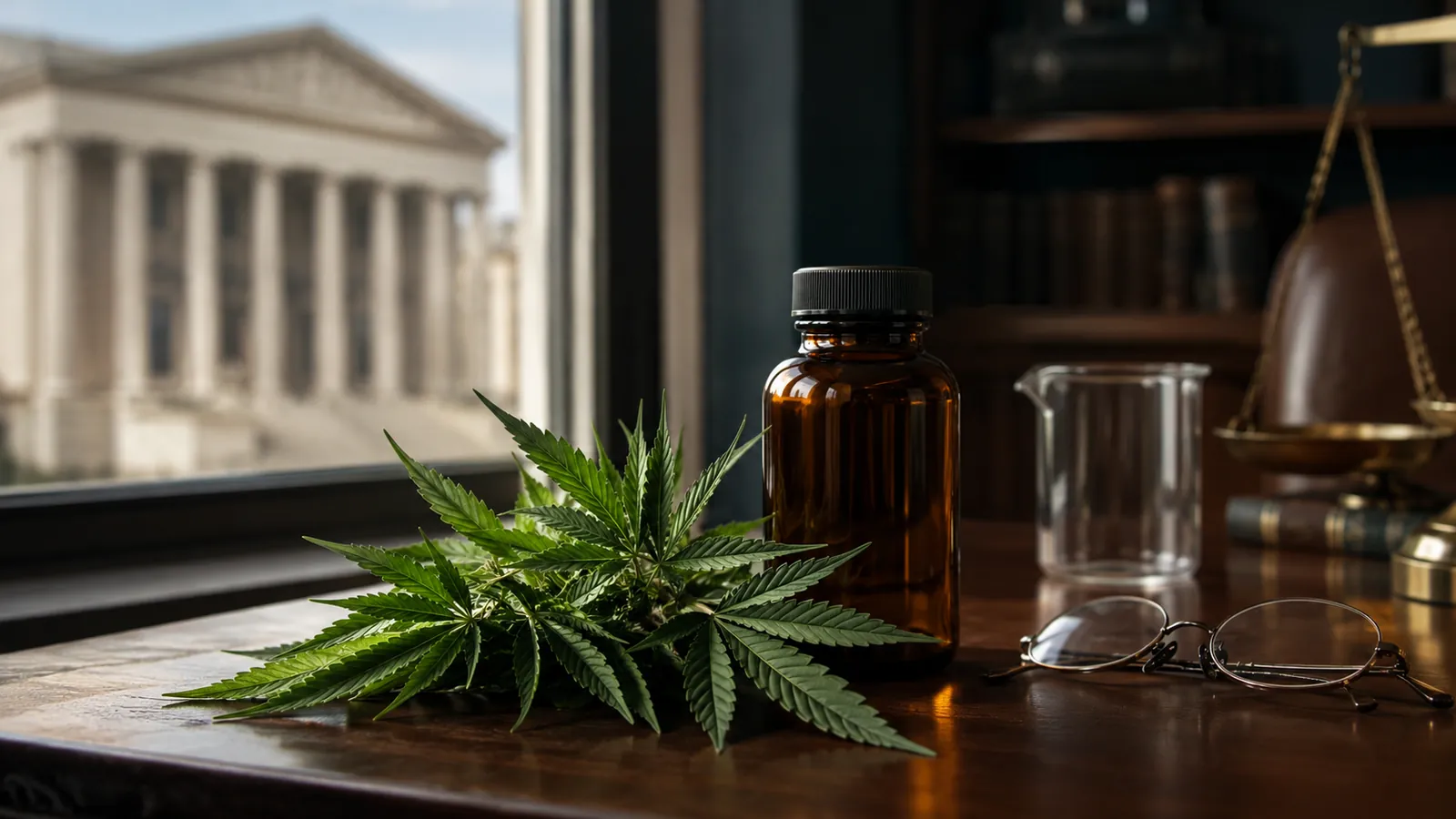
Delta 8 THC has spent the last several years in an unusual position: an intoxicating compound sold openly in gas stations, vape shops, and online storefronts, marketed as hemp, and treated by many buyers as a legal and therefore harmless version of cannabis. That position rests on a single line of federal law, and Congress rewrote it. A provision in the FY2026 Agriculture Appropriations Act, signed November 12, 2025, narrows the federal definition of hemp so that most delta 8 products no longer qualify. The change takes effect November 12, 2026.
For people in recovery and the families around them, the legal mechanics matter less than what they reveal. A product category built on a drafting quirk was never reviewed for safety, never standardized for dose, and never checked for what else ended up in the bottle. Those problems don’t disappear on a compliance deadline, and the word “hemp” on a label never solved them.
Key Takeaways
- The federal hemp definition changes from a delta-9-only limit to a total THC limit on November 12, 2026, which pulls most delta 8 products out of the legal hemp category.
- Congress enacted the change in November 2025, but lawmakers are still fighting over the effective date, so the timeline is real and not yet fully settled.
- Commercial delta 8 is not extracted from plants in meaningful quantities. It’s chemically converted from CBD in a lab, and the FDA has flagged the chemicals and by-products that the process can leave behind.
- Poison centers have logged thousands of delta 8 exposures, with young children making up a large share of the serious cases.
- Florida has not banned delta 8 at the state level, so the federal change is what actually shifts the ground under Florida buyers.
What Delta 8 THC Actually Is
Delta 8 tetrahydrocannabinol is one of more than 100 cannabinoids the cannabis plant produces. The key detail is how little the plant makes. According to the FDA, delta 8 THC “is not found in significant amounts in the cannabis plant,” so concentrated delta 8 is typically manufactured from hemp-derived CBD through chemical conversion.
That conversion is the whole business model. Hemp growers produce CBD in volume. Converting cheap surplus CBD into an intoxicating compound turns a slow-moving crop into a product people buy again. The molecule that comes out is close enough to delta-9 THC to produce a real high.
The FDA is direct about the effect: delta-8 THC has psychoactive and intoxicating effects similar to delta-9 THC, the compound responsible for the high associated with cannabis. It also notes these products likely expose people to far higher levels than occur naturally in hemp extracts, which means the long history of hemp use tells you nothing useful about their safety.
The 2018 Farm Bill Line That Created the Delta 8 Market
The 2018 Farm Bill legalized hemp by defining it in 7 U.S. Code section 1639o as cannabis and its derivatives “with a delta-9 tetrahydrocannabinol concentration of not more than 0.3 percent on a dry weight basis.” Every word of that test points at one molecule.
Manufacturers read it literally. A product could contain very little delta-9 THC, clear the 0.3% threshold, and still be loaded with delta-8 or other intoxicating cannabinoids. Nothing in the definition capped those. The Congressional Research Service calls this reading the “farm bill loophole,” and it’s why an entire retail category grew up outside the rules that govern state cannabis programs.
The result was a market with no federal potency ceiling, no mandatory testing standard, no age requirement in most places, and no agency signing off on what was in the package.
What the Federal Hemp Rules Change for Delta 8 in 2026
Section 781 of the FY2026 Agriculture Appropriations Act rewrites that definition. The new test measures total THC, including THCA, at not more than 0.3% on a dry weight basis, which closes the delta-9-only reading. The statute also excludes several categories from hemp entirely, and anything excluded is regulated as marijuana under the Controlled Substances Act.
Per the Congressional Research Service analysis of the new hemp definition, the exclusions cover:
- Viable cannabis seeds above 0.3% total THC, including THCA, on a dry weight basis.
- Hemp-derived cannabinoid products containing cannabinoids that “are not capable of being naturally produced” by a cannabis plant.
- Products containing cannabinoids that can occur naturally but were “synthesized or manufactured outside the plant.”
- Intermediate products above 0.3% combined total THC and other cannabinoids with similar effects.
- Final products above 0.4 milligrams combined total THC and similar cannabinoids per container, measured by the innermost retail packaging rather than per serving.
Points two and three are the ones that catch delta 8 directly. Commercial delta 8 is synthesized outside the plant by design, which is exactly the conduct the new language describes.
The Effective Date Is Still Being Fought Over
The change is law, but the calendar isn’t locked. On August 8, 2026, the Senate passed a continuing resolution that would push most of the new definition to December 11, 2026, while letting the exclusion for cannabinoids that can’t be naturally produced take effect on schedule in November. The House versions include no delay. Separate bills would postpone the whole thing for two years or repeal it outright.
One more piece is missing. The law directed the FDA to publish lists identifying which cannabinoids occur naturally, which count as THC class compounds, and how “container” should be read. As of August 2026, those lists still hadn’t been published. Retailers, testing labs, and buyers are all working without them.
Why “Hemp-Derived” Sounds Safe and Why That’s Misleading
“Hemp-derived” describes where a molecule started, not what it does or how it was made. The FDA warns that some of these products are labeled simply as hemp products, which “may mislead consumers who associate ‘hemp’ with ‘non-psychoactive.'”
Several assumptions tend to travel with that label, and each one breaks down:
- Legal means reviewed. The FDA states plainly that delta 8 THC products have not been evaluated or approved for safe use in any context.
- Hemp means mild. Delta 8 is intoxicating, and the concentrations sold are far above anything the plant produces on its own.
- Sold in a store means regulated. Convenience stores and vape shops don’t operate under the seed-to-sale testing rules that apply to licensed cannabis dispensaries.
- Labeled dose means actual dose. The FDA lists variability in formulation, labeling, and delta 8 concentration among its central concerns.
The Product Risks Regulators Keep Flagging
The manufacturing process is where most of the risk concentrates. Converting CBD into delta 8 requires additional chemicals, and the FDA has been specific about what can go wrong:
- Some manufacturers use potentially unsafe household chemicals to drive the conversion, and may add additional chemicals to alter the finished product’s color.
- The reaction can leave harmful by-products and contaminants in the final product, with further uncertainty depending on the starting material.
- Production may happen in uncontrolled or unsanitary settings.
The FDA also received 104 adverse event reports tied to delta-8 products between December 1, 2020, and February 28, 2022. Of those, 55% required intervention such as evaluation by emergency medical services or hospital admission. Reported effects included hallucinations, vomiting, tremor, anxiety, dizziness, confusion, and loss of consciousness. That pattern resembles what people describe with unregulated products sold alongside them, including the ones covered in what families should understand about kratom.
What Poison Center Data Shows About Children
Delta 8 edibles look like candy because they are candy in every respect except what’s in them. National poison control centers logged 2,362 delta 8 exposure cases between January 1, 2021, and February 28, 2022. Pediatric patients accounted for 41% of them, and 82% of the unintentional exposures involved children.
A larger review published in the Journal of Medical Toxicology found 4,925 delta 8 exposures reported to US poison centers across 2021 and 2022, with 69.8% coming from the South. Children younger than six made up 30.4% of cases. The researchers also found exposure rates ran far lower in states that banned delta 8 than in states with no rules at all.
Delayed onset makes edibles particularly risky for small children, who can keep eating while waiting for something to happen. Households already careful about keeping medications out of reach should treat these products the same way.
Where Florida Stands Right Now
Florida regulates delta 8 rather than banning it. Under Florida Statute 581.217, consumable hemp extract is legal, and products intended for human ingestion or inhalation “may not be sold in this state to a person who is under 21 years of age.” The Department of Agriculture and Consumer Services oversees packaging, labeling, and testing, and the statute bars packaging that’s attractive to children, including humanoid shapes and candy-like forms.
Lawmakers have tried to tighten this and haven’t succeeded. The most recent attempt, Senate Bill 1270, died in the Agriculture committee on March 13, 2026. An earlier restriction bill was vetoed in 2024.
So Florida’s rules stay where they are, and the federal change is what actually moves. Products sitting legally on a Florida shelf today may fall outside the hemp definition once the new federal test applies.
What a Shifting Legal Picture Means in Recovery
For someone working on a substance use disorder, delta 8 occupies a dangerous middle space. It’s intoxicating enough to matter, legal enough to rationalize, and available enough to pick up without planning to. People sometimes reach for it as a softer option or as something to take the edge off, which makes it a substitute rather than a step forward.
A few things are worth being clear about:
- Delta 8 produces intoxication, so for anyone whose plan involves abstinence, it isn’t a neutral choice.
- Dose is unpredictable when labeling is inconsistent, which makes any personal limit hard to hold.
- It isn’t a withdrawal treatment, a taper aid, or a substitute for care from a clinician.
- Legal status is shifting, which can affect employment testing, probation, and treatment agreements.
That last point deserves attention. People often assume a legal purchase carries no consequences, and that assumption can unravel quickly when a positive test or a changed statute comes into play. Talking it through openly with a treatment team beats discovering it later, and outpatient programs exist partly to catch these decisions while they’re still small.
If delta 8 has already become a regular part of someone’s week, that’s worth naming rather than filing away as harmless. Recognizing a pattern early is a normal part of relapse prevention, and it’s far easier to address a habit while it’s still a habit. The same awareness carries into the habits that hold up over the long run.
References
- 5 Things to Know about Delta-8 Tetrahydrocannabinol – Delta-8 THC – U.S. Food and Drug Administration
- 7 U.S. Code Section 1639o – Definitions – Legal Information Institute, Cornell Law School
- Changes to the Statutory Definition of Hemp and Implications for Agricultural Policy – Congressional Research Service
- Delta-8 Tetrahydrocannabinol Exposures Reported to US Poison Centers – Journal of Medical Toxicology
- Florida Statute 581.217 – Hemp Program – The Florida Senate
- SB 1270: Food and Hemp Products – The Florida Senate
Frequently Asked Questions
Does Delta 8 Show Up on a Standard Drug Test?
Usually yes. Common immunoassay panels screen for THC metabolites and generally don’t distinguish delta-8 from delta-9, so a delta-8 product can produce a positive cannabis result. That matters for anyone subject to employment testing, probation, drug court, or a treatment program agreement.
What Should You Do if a Child Eats a Delta 8 Edible?
Call Poison Control at 1-800-222-1222 right away, and call 911 if the child is unresponsive, having trouble breathing, or seizing. Bring the package with you to any medical visit, since potency and ingredients vary widely between products and the label helps clinicians.
Will CBD Products Be Affected by the Same Rule Change?
Non-intoxicating CBD products stay within the hemp definition as long as they meet the new total THC limits. The catch is that the per-container cap applies to finished products generally, so some full-spectrum items carrying small amounts of THC could be swept in even when they aren’t marketed as intoxicating.
What Does Total THC Mean on a Lab Report?
Total THC accounts for THCA converting to active THC when heated, so labs calculate it rather than reading delta-9 alone. A common formula adds delta-9 THC to THCA multiplied by 0.877. A product can show low delta-9 and still carry a high total THC figure.
Can Someone Be Penalized for Delta 8 They Already Own?
Once a product falls outside the hemp definition, it’s treated as marijuana under the Controlled Substances Act, and state law governs much of the day-to-day enforcement. Anyone with questions about their own situation should ask a licensed attorney rather than relying on how a product was sold.