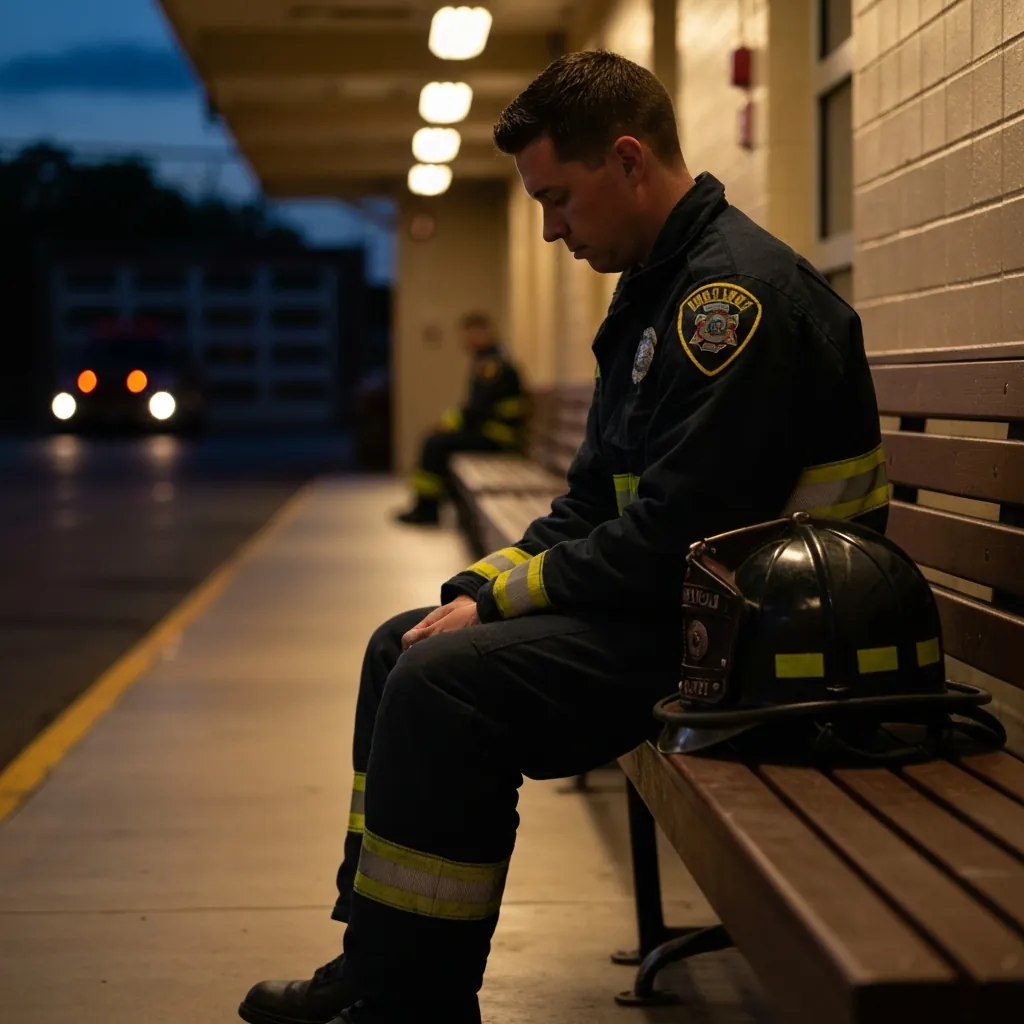
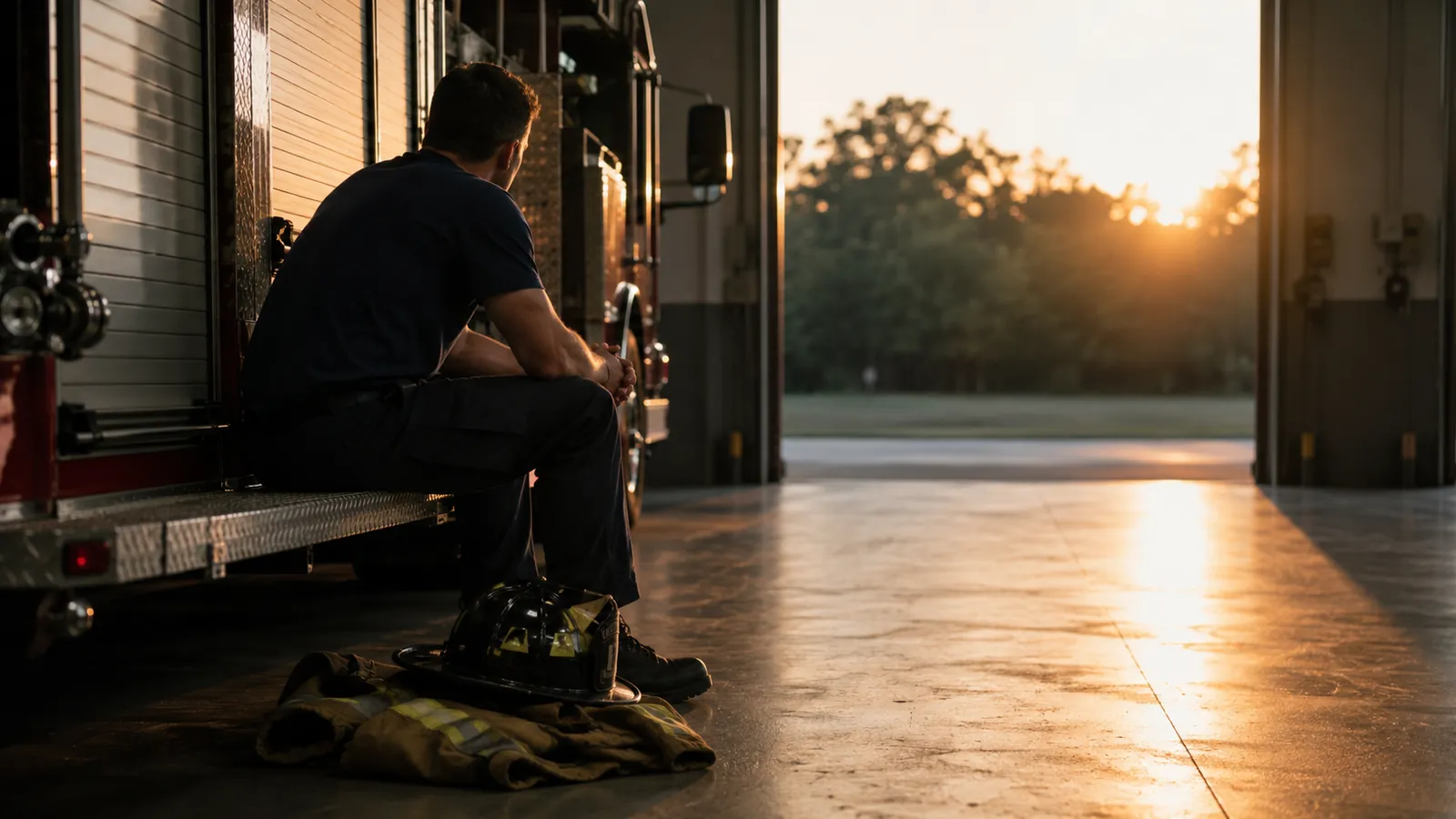
The call ends, the report gets filed, somebody backs the rig in, and 40 minutes later a group of people who just handled something the public will never see are sitting around a table with a cooler between them. Nobody scheduled it. It happens because it works. Alcohol acts fast on a nervous system that’s still running at operational speed, and after a night shift it’s the one thing reliably available that takes the edge down without a phone call, a form, or a waiting room.
That’s the part most writing about first responders and alcohol skips. The drinking starts as a tool that does its job, which is exactly why it’s hard to notice when the job changes. The trouble shows up later: the amount needed climbs, the sleep it was supposed to buy stops arriving, and the week starts organizing itself around the window when drinking is possible. Catching that shift matters more than any single rough night does.
Key Takeaways
- Alcohol becomes the default because it’s fast, legal, social, and it fits the only unsupervised hours a shift schedule leaves open.
- Roughly 30% of first responders develop a behavioral health condition such as depression or post-traumatic stress disorder, compared with about 20% of the general population.
- Alcohol shortens the time it takes to fall asleep and then fragments the second half of the night, which makes it a poor fix for a group already carrying high rates of sleep disorders.
- The research is more careful than the usual talking points: one bad call rarely explains the drinking, and cumulative load plus untreated symptoms explain it better.
- Federal rules give substance use disorder treatment records stronger protection than ordinary medical records, and the questions to ask about that are specific and answerable.
Why First Responders Reach for Alcohol After a Shift
Start with the schedule, not the psychology. Shift work concentrates off-duty time into long, irregular blocks that don’t line up with anyone else’s calendar. A therapist’s office is open while you’re on the truck. The bar, the garage, and the kitchen table are open when you get off it. Whatever fits that window is what gets used, and alcohol fits it better than almost anything else.
The measured drinking patterns reflect that. In a population-based study of 656 male firefighters across randomly selected career and volunteer departments, career firefighters reported drinking on roughly 10 days a month, about half of their off-duty days, and they drank heavily on those days. Among career firefighters, 58% averaged three or more drinks on the days they drank.
The Culture Around the Table
The station, the precinct, and the squad all run on a shared understanding that you process what happened with the people who were there. That instinct is healthy. The container it comes in usually is not. Debriefing over drinks bundles two things together: real peer support and a sedative, and only one of them is doing the work you think it’s doing.
It also sets a norm that’s hard to step outside of. Passing on a round after a difficult call isn’t just declining a drink; it’s stepping out of the ritual the crew uses to close the shift. That’s a small social tax, and you pay it every time.
The Hypervigilance That Doesn’t Switch Off
Nobody trains for this job by learning to relax. The training teaches you to stay scanning, stay ahead of the scene, and keep the threat model running. That state is an asset on duty and a liability at 2 a.m. in your own bed, and it has no shutoff valve at the end of the tour.
Alcohol is a fast, blunt, available answer to that problem. It drops the physical signature of arousal within minutes, which is why it gets used and why it keeps getting used. According to the SAMHSA Disaster Technical Assistance Center, an estimated 30% of first responders develop behavioral health conditions including depression and post-traumatic stress disorder, compared with about 20% among the general population. Many manage symptoms with the tool closest at hand.
The Sleep Problem Alcohol Makes Worse
Sleep is where this shows up on duty. In a national sample of 6,933 firefighters from 66 departments, 37.2% screened positive for a common sleep disorder, including obstructive sleep apnea, insomnia, shift work disorder, and restless legs syndrome. Those who screened positive were about twice as likely to report a motor vehicle crash and substantially more likely to report depression and anxiety.
Now add the drink that’s supposed to help. A review of the research on alcohol and normal sleep found that alcohol shortens the time it takes to fall asleep and consolidates the first half of the night, then breaks up the second half. Total rapid eye movement sleep drops at moderate and high doses, and the first REM period shifts later at every dose tested.
Read that against a night-shift rotation and the pattern is obvious. You fall asleep faster, wake at 3 a.m. wired, sleep badly through the back half, and start the next tour with a deficit you’ll close the same way. When insomnia is already amplifying what you’re carrying, alcohol buys the first two hours and takes the next four.
Where Trauma and Drinking Actually Overlap
The popular version is simple: a responder sees something terrible, and the drinking starts. The research is more careful, and the careful version is more useful.
In a large sample of urban police officers, 18.1% of male and 15.9% of female officers reported adverse consequences from alcohol use, and 7.8% met the study’s criteria for lifetime alcohol abuse or dependence. Female officers drank in patterns similar to their male colleagues and substantially more than women in the general population. Here’s the part that gets left out of most summaries: in that study, critical incident exposure and PTSD symptoms were not associated with how much officers drank. Broader psychiatric symptoms were associated with the consequences of drinking.
That changes what you look for. Waiting for the one identifiable call that explains everything is how people miss the real pattern, which is cumulative and quiet:
- Years of exposure rather than one incident, with no single event big enough to name
- Symptoms never treated because they never got severe enough to force the issue
- Sleep debt that has run so long it reads as normal
- A drinking pattern that grew slowly enough that nobody, including the person drinking, can say when it changed
That overlap is the reason post-traumatic stress and substance use get treated together rather than one after the other.
How to Tell When It Has Crossed a Line
The National Institute on Alcohol Abuse and Alcoholism defines binge drinking and heavy drinking by pattern and quantity, and those thresholds are worth knowing. They’re a screening tool, not a verdict, and counting drinks is the conversation most people in this line of work tune out immediately. The more useful test is function. What is the drinking for, and what happens when it isn’t available?
- The purpose shifted from social to functional. You used to drink with the crew. Now you drink to get to sleep, and you’d drink alone for the same result.
- Tolerance is climbing. The amount that used to settle you doesn’t anymore, and you adjusted upward without deciding to.
- The schedule bends around it. You know which shifts protect the drinking window, and that shapes how you feel about the rotation.
- You’ve started managing the information. Pouring before you get home, keeping a second stash, and rounding the number down are all the same behavior.
- It’s touching duty. Slower reaction time, a shorter fuse with a partner or a patient, or a morning where you did the math on the drive in.
- Stopping feels physically bad. Shakiness, sweating, a racing heart, or nausea after a stretch without drinking is a medical signal, not a willpower problem.
That last one deserves its own line. Withdrawal from sustained heavy drinking can escalate into seizures and delirium. It needs medical supervision, not a weekend of toughing it out.
Why First Responders Wait Longer Than Almost Anyone
The delay isn’t denial or weakness. It’s a rational read of real risks. SAMHSA’s review of the barriers describes what people in the fire service, law enforcement, and EMS actually report: stigma, lack of time, poor access to providers, lack of trust, and fear of job repercussions. Translated into the version people say out loud:
- Fitness for duty. If I raise my hand, does somebody take my certification, my truck, or my weapon
- Confidentiality. Who reads the file, and does it end up in front of a chief or a union rep
- Identity. I’m the person others call when it goes wrong. I don’t get to be the one who couldn’t handle it.
- Access. Every appointment slot lands during a tour, and the clinician on the other end has never set foot on a scene.
Those concerns deserve direct answers, not reassurance, because dismissing them is how a person decides not to ask twice.
What Confidentiality Actually Looks Like
Substance use disorder treatment records carry protections that go beyond ordinary medical privacy. Under 42 CFR Part 2, federal regulations restrict how these records get used and disclosed, and the stated intent is that someone who gets treatment for a substance use disorder isn’t made more vulnerable by the existence of their record than someone who never sought treatment at all. Disclosure generally requires written consent, and that consent must specify who receives what.
A few distinctions do real work here:
- Clinical treatment records and an employer-ordered fitness-for-duty evaluation are two different tracks with two different audiences.
- A voluntary self-referral before an incident is a different conversation than a mandated referral after one.
- Peer support conversations are valuable, but they don’t carry the same legal protections as clinical records.
- Any release you sign should name the recipient and the specific information covered, and you can ask to read it before it goes anywhere.
Ask any program those questions before you start. One that treats responders should answer without hedging.
What a Treatment Track Built for Shift Workers Involves
Programs designed around a Monday-to-Friday office worker don’t survive contact with a 24-on, 48-off rotation. A track built for this population differs in ways that are practical rather than cosmetic:
- Level of care matched to the schedule, so stepping down into outpatient work lines up with a realistic return to duty.
- Medically supervised withdrawal when the drinking has been heavy and sustained, handled by clinicians rather than alone.
- Trauma-focused therapy alongside the substance use work, not queued behind it, since treating one and ignoring the other leaves the driver in place.
- Treat sleep as a clinical target, including screening for apnea and shift work disorder, instead of writing bad sleep off as part of the job.
- Clinicians and peers who know the work, so nobody has to explain what a pediatric code or a line-of-duty death does to a person.
- A return-to-duty plan built with the rotation and the station culture in view.
Choosing correctly between partial hospitalization and intensive outpatient care is what makes the rest of it workable, and the specifics of first responder addiction treatment in West Palm Beach cover what each level involves.
If You Love Someone Who Works These Shifts
You’re likely the first to notice, and the one with the most to lose by handling it badly. A few things hold up:
- Time it away from a shift. Nobody hears anything useful 90 minutes after a bad call or on four hours of sleep.
- Bring observations, not labels. What you noticed about sleep, temper, and quantity lands. A diagnosis delivered at the kitchen table does not.
- Expect the first conversation to go nowhere, and plan a second one anyway.
- Use the peer network. In this culture, a credible message almost always arrives sideways, from someone who has worked the same job.
Reaching out on someone’s behalf is a reasonable first move. Asking a program the confidentiality questions above before the responder ever calls removes the biggest reason people stall.
References
- Alcohol Use among Firefighters in the Central United States – Occupational Medicine (Oxford)
- First Responders: Behavioral Health Concerns, Emergency Response, and Trauma – SAMHSA Disaster Technical Assistance Center Supplemental Research Bulletin
- Common Sleep Disorders increase risk of Motor Vehicle Crashes and Adverse Health Outcomes in Firefighters – Journal of Clinical Sleep Medicine
- Alcohol and Sleep I: Effects on Normal Sleep – Alcoholism: Clinical and Experimental Research
- Patterns and Predictors of Alcohol Use in Male and Female Urban Police Officers – The American Journal on Addictions
- 42 CFR Part 2: Confidentiality of Substance Use Disorder Patient Records – Electronic Code of Federal Regulations
Frequently Asked Questions
Is Screening Positive for Problem Drinking the Same as Having an Alcohol Use Disorder?
No. Screening tools catch a pattern worth a closer look, and they’re built to over-include rather than miss people. A diagnosis comes from a clinical evaluation against specific criteria. A positive screen means the next step is an assessment, not that the answer is already decided.
Do Peer Support Conversations Carry the Same Protections as Clinical Records?
Usually not. Peer support programs run under department policy and, in some states, a statutory privilege that varies considerably in what it covers. Clinical records held by a treatment program fall under federal substance use disorder confidentiality rules. Both have real value, and it’s worth knowing which one you’re in before a conversation starts.
Can Someone Stay on the Job While Getting Treatment?
Often, it depends on the level of care and the department. Outpatient and intensive outpatient schedules are built to run alongside work, while residential and partial hospitalization require time away. Job protection and leave depend on the employer, the union agreement, and applicable law, so those answers come from a human resources representative or a union rep, not a treatment program.
Is Cutting Back Gradually on Your Own a Reasonable First Step?
That depends entirely on how much and how long, which is a question for a clinician, not a self-assessment. Light or occasional drinking is one situation. Sustained heavy daily drinking is another, because reducing or stopping on your own can trigger withdrawal that becomes medically dangerous. Get evaluated first, then decide with someone qualified to supervise it.
How Do You Raise This With a Coworker Without Making It an Accusation?
Speak from what you’ve seen on shift rather than from what you’ve concluded, and keep it to one person and one conversation instead of a group. Naming a specific change, like sleeping in the recliner or a shorter fuse on calls, is harder to argue with than a label. Offer to make the first call with them, and accept that your job is to open a door, not to walk them through it.